Embedding Design for Scale
Redesigning AWS Skill Builder and institutionalizing an operating model.
This case study has been condensed with all confidential information removed. If you would like to learn more about this design and process, please contact me.

Overview
By this point, the organization had a research practice, a measurement framework, and a continuous evidence pipeline. What it didn't have was a way of working that could translate all of that into consistent, high-quality product delivery across a complex platform.
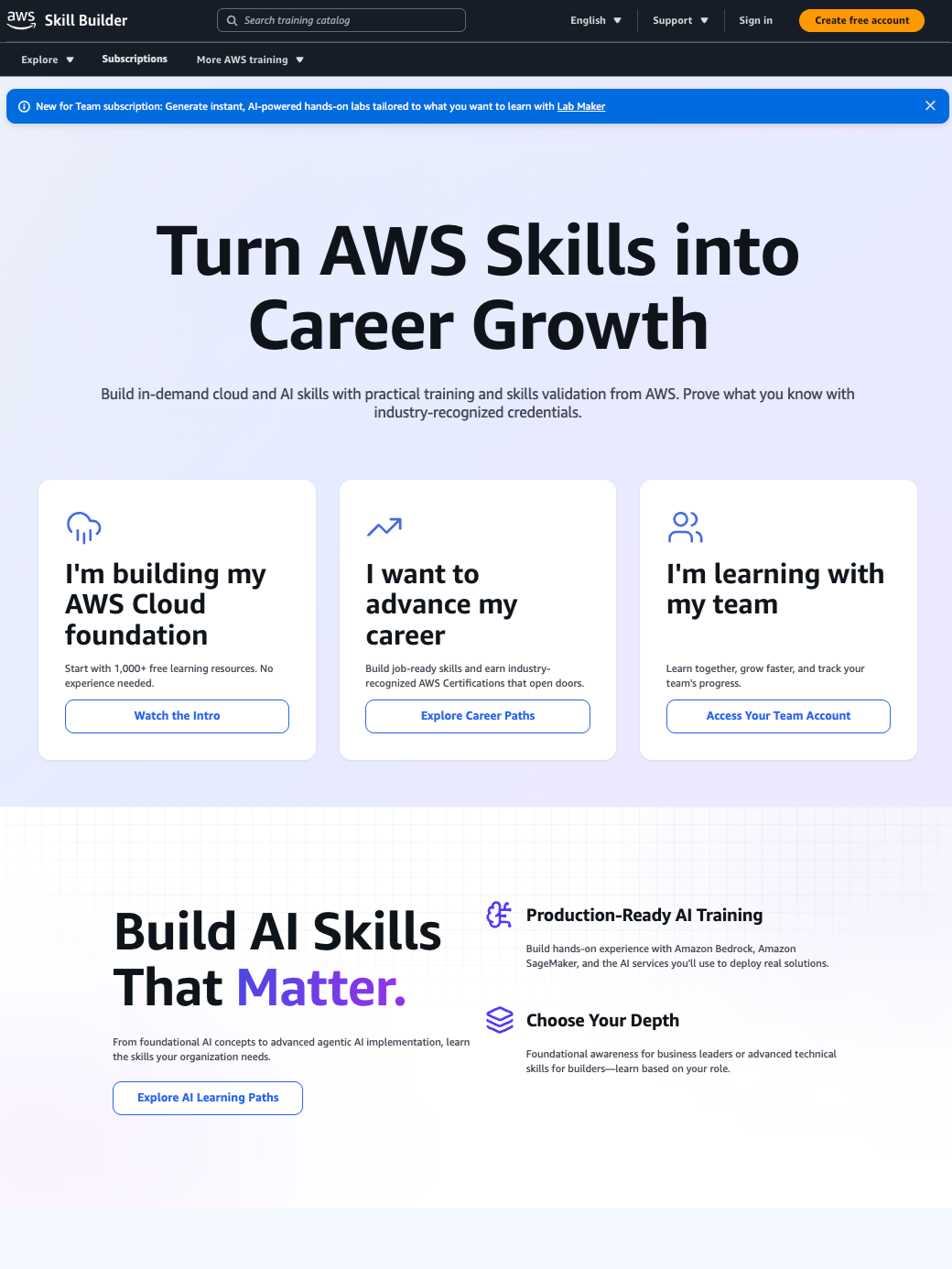
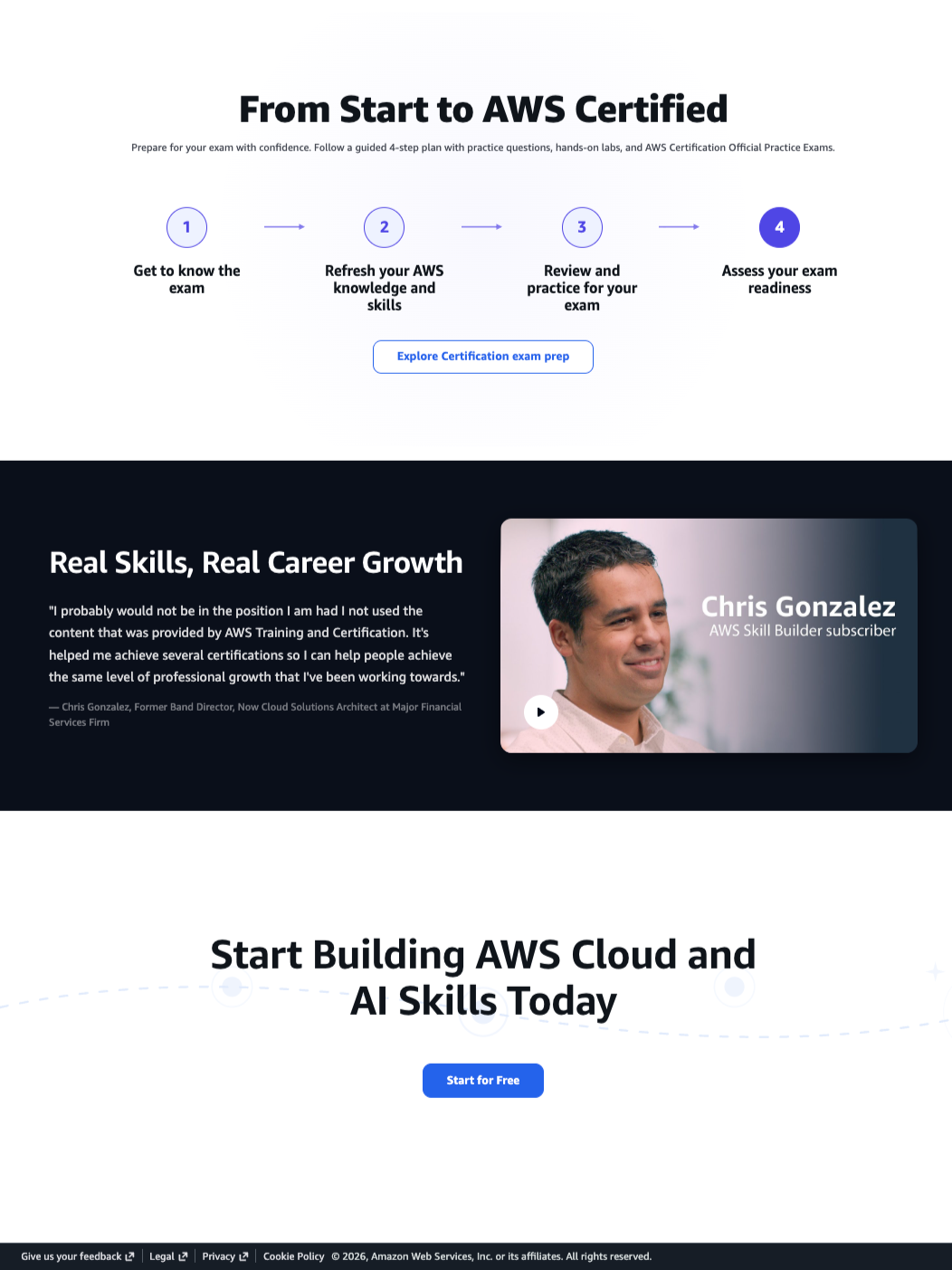
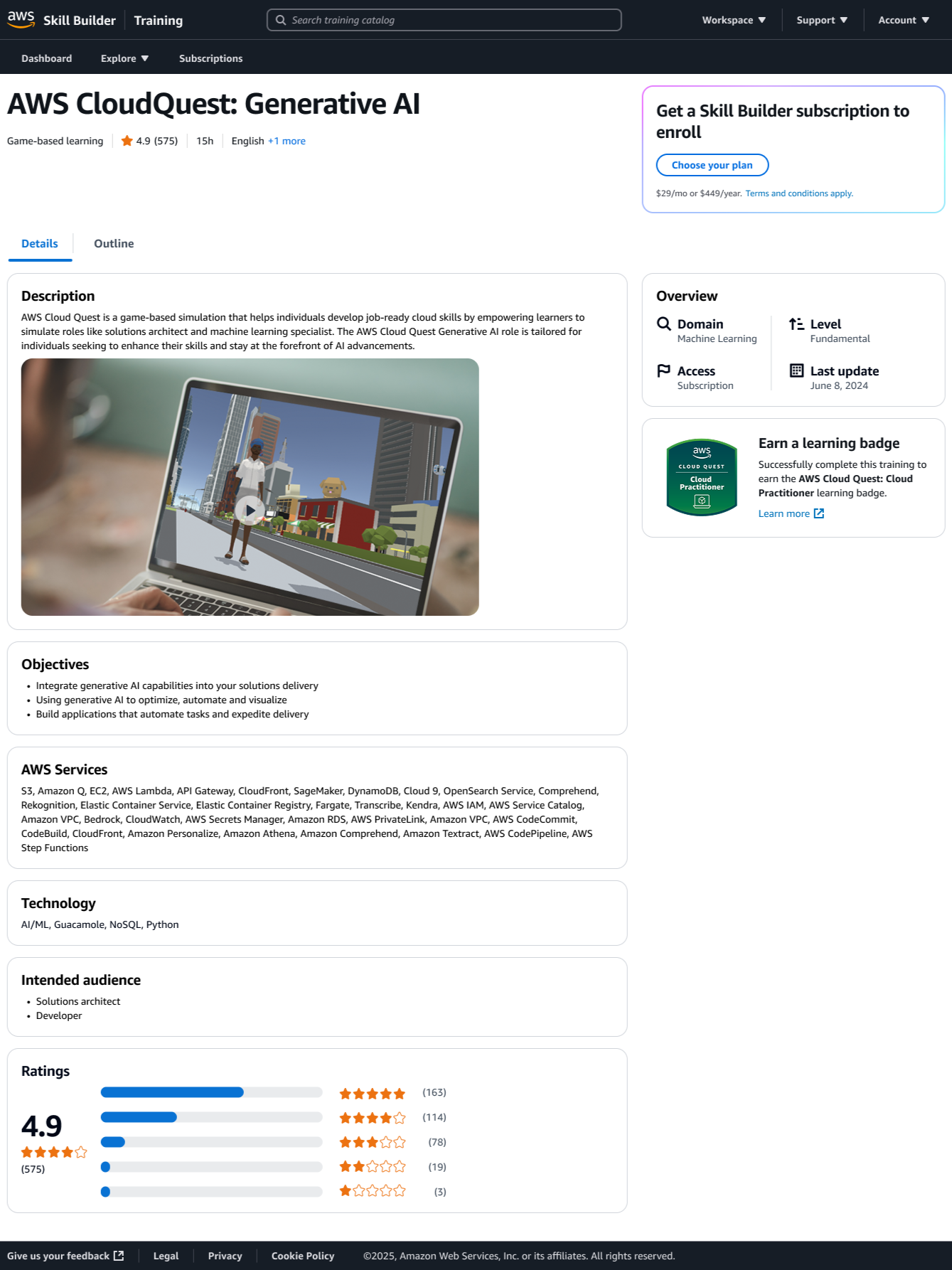
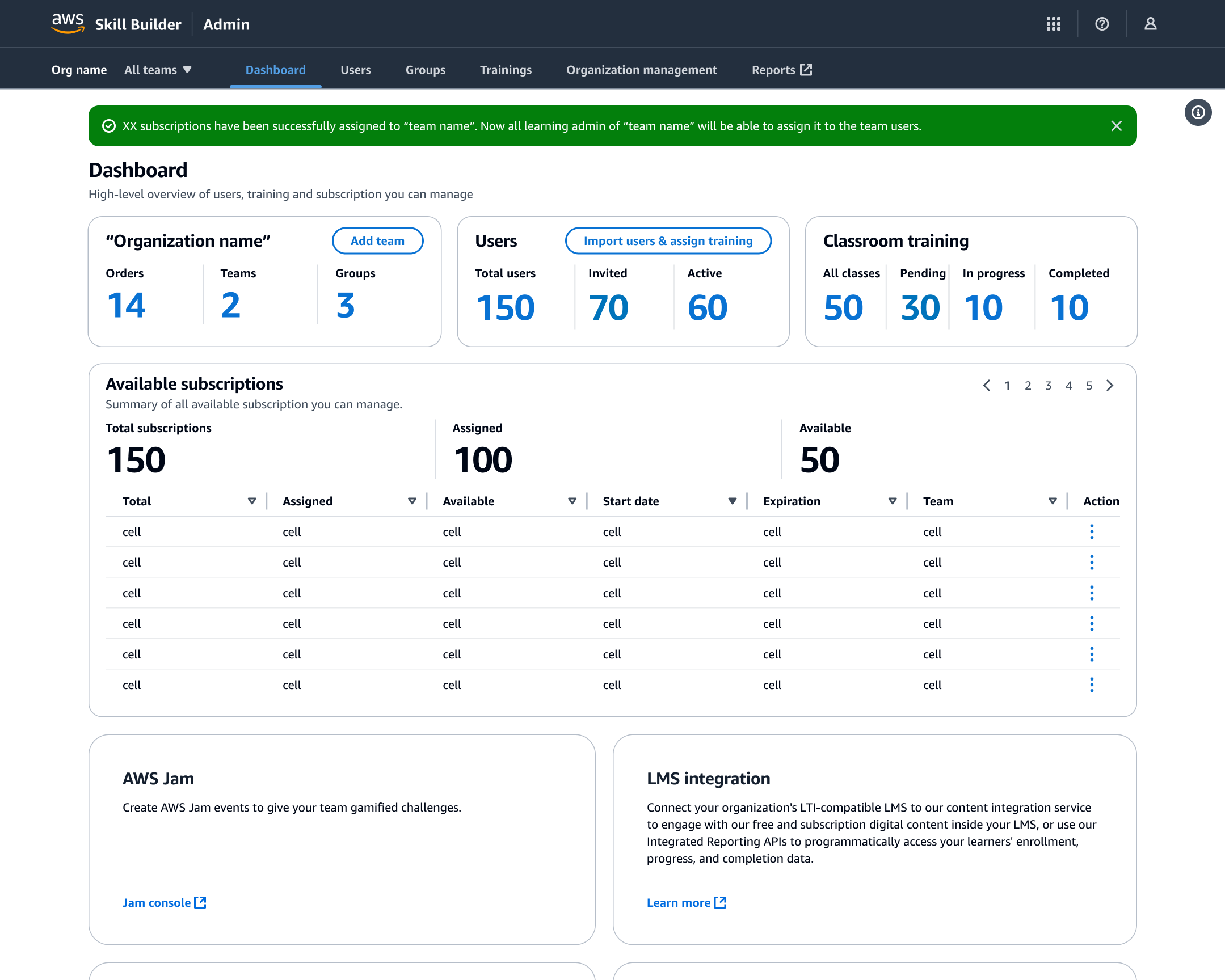
AWS Skill Builder served 25 million customers across four distinct product surfaces: a B2C learning experience, a B2B administration console for training managers, a payment and subscription system, and an internal learning management system where all training content was created and managed. The redesign spanned 30 pages across these four surfaces, each serving different user types — learners discovering and consuming content, external admins managing teams and compliance, internal content authors building curriculum, and the shared platform chrome tying them together.
Each surface had different users, different engineering teams, and different product priorities. Design was operating from a central pool, handing off work after decisions had already been shaped. Engineering and product were moving on their own timelines. Trust was low, shared visibility was limited, and the platform had grown organically into inconsistent patterns with no design system, no accessibility standards, and fragmented discoverability.
The challenge wasn't just redesigning the platform. It was building a way of working that could span all four product contexts and hold up after the redesign was done.
My Role
I led a team of 10 across all product surfaces. My direct contributions included the team restructuring (the embedded model, tiered reviews, and sprints), rapid research mechanism, design strategy, and accessibility standards. I designed alongside the team while my designers owned the surface-level design work within each product area. I also managed the cross-functional relationships with engineering and product leadership that made the structural changes possible. I was building the operating model, system architecture, and deciding how the team would work.
Problem
Disconnected functions.
Design, product, and engineering were operating on separate timelines. Designers were brought in at handoff, not problem definition. Product was making roadmap decisions without adequate research input. Engineering was building against specs that didn't reflect the full design intent. The result was slow delivery, rework, and a pattern where each function optimized for its own workflow rather than the shared outcome.
No unifying system.
The platform had no component library, no shared templates, no UX writing standards, and no systematic approach to accessibility. Each product surface had developed its own patterns. A user moving between the B2C experience and the admin console encountered different navigation models, different terminology, and different interaction patterns. The inconsistency wasn't just a design problem — it was a trust problem for customers operating across surfaces.
Testing that couldn't keep pace.
The few studies that happened were long-cycle and reactive — validation after the fact rather than input during design. There was no mechanism for rapid experimentation, which meant teams were shipping without confidence and iterating slowly when problems surfaced.
Solution
Embedded partnerships.
I restructured the team model, moving designers out of a central pool and embedding them directly within engineering pods. Each designer was paired with a product manager and engineering lead, forming a trio that worked together from problem definition through delivery. This meant design was in the room when constraints were identified and tradeoffs were made, not interpreting them secondhand from a spec.
Tiered decision-making.
Not every design decision needs the same level of review. I created a tiered process that distinguished high-stakes decisions requiring full cross-functional alignment from decisions designers could make independently. This removed bottlenecks without removing accountability — designers moved faster on routine work while critical decisions got the scrutiny they needed.
Rapid experimentation.
I built a 3-week sprint mechanism for continuous testing, replacing the long-cycle validation model. This increased testing volume by 143% while reducing cycle time by 57%. Teams could test early concepts, iterate on findings, and ship with evidence rather than assumptions.
A design system that scaled across surfaces.
The component library, 11 reusable templates, and UX writing standards were built to work across all four product contexts — serving learners, external admins, content authors, and platform operations within a single coherent system. The system included 22 component sets with 64 variants, 80 standalone components, and defined states across seven interaction patterns — all documented for engineering handoff and built to WCAG 2.1 compliance. The system had to be flexible enough to accommodate fundamentally different user mental models while enforcing enough consistency that the platform felt like one product.
Results
20% reduction in design delivery time. Platform redesign delivered 6 weeks ahead of schedule. +143% testing volume with 57% reduction in cycle time. +30% content discoverability. +30.5% navigation ease. +25% learner engagement. 100% WCAG 2.1 compliance.
But the real result was that the mechanisms outlasted the project. The embedded trio model, the tiered review process, and the rapid experimentation cadence were formalized as the operating model. These weren't process changes adopted for a single initiative — they became how teams work. The design system continues to govern how new features are built across all four product surfaces, and the research mechanism continues to generate evidence that shapes what gets built next.

What this made possible
This is where the four chapters connect. The research practice created access to customers. The evidence pipeline created continuous signal. The measurement framework turned shared signals into a language for quality. And the team mechanisms created the organizational muscle to act on all of it — consistently, across products, at pace.
What started as infrastructure became culture. Not because it was mandated, but because it worked — and because the teams who used it shipped better products, faster, with evidence they trusted. That's the version of institutional change that holds.